+8613480439007
 jenny@goodingjp.com



In the world of precision manufacturing, the ability to make fast, reliable pass/fail decisions is critical. This is where the Go/No-Go gauge, one of the simplest yet most fundamental inspection tools, shines. But what exactly makes a precision Go/No-Go gauge reliable? It’s all about understanding and adhering to strict international tolerance standards during their design and manufacture.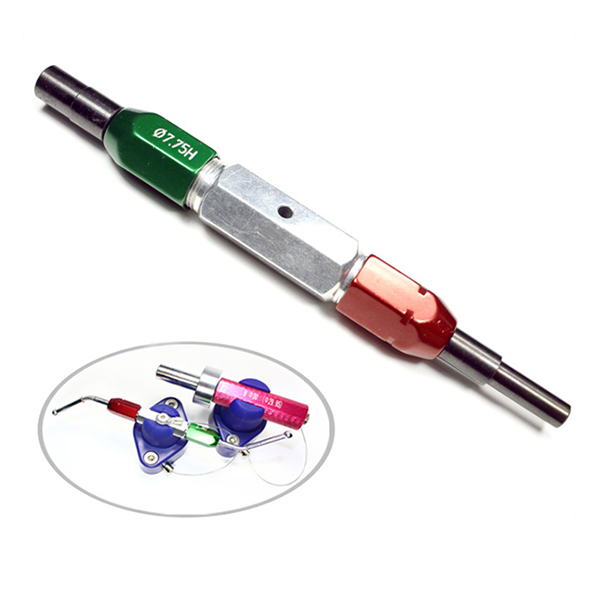
Before diving into tolerances, it's essential to recall the basic principle. A Go/No-Go gauge set provides a binary test:
The GO end represents the maximum material condition (e.g., the smallest acceptable hole or the largest acceptable shaft). It must assemble with the part under its own weight or with light pressure.
The NO-GO end represents the minimum material condition (e.g., the largest acceptable hole or the smallest acceptable shaft). It must not assemble with the part.
A part is accepted only if the GO end passes and the NO-GO end fails. This simple check verifies that the feature (like a hole, shaft, or thread) is within its specified tolerance zone.
Thread gauges are particularly complex due to the multiple elements involved (pitch, major/minor diameter, flank angle). International standards, such as those for Unified Inch and Metric threads, define precise tolerance classes to ensure interchangeability and fit.
Unified Inch Threads (ASME B1.1):
For inch threads, classes like 1A/1B, 2A/2B, and 3A/3B define the tightness of the fit.
1A/1B: The loosest tolerance, used for quick and easy assembly, even with dirty or slightly damaged threads.
2A/2B: The most common class for general-purpose mechanical fasteners, balancing fit and manufacturability.
3A/3B: The tightest tolerance, used for critical applications where safety and high strength are paramount.
For manufacturers, understanding these classes is vital. A Go/No-Go gauge manufactured for a 2B internal thread must be produced to exacting standards to correctly accept or reject parts meant for that class.
Metric Threads (ISO 965/ DIN 13):
Metric threads use tolerance classes like 5H, 6H, 7H for internal threads and 4h, 6g, 6h for external threads.
6H/6g: This is the most recommended and commonly used fit for general-purpose bolts and nuts.
The Role of "g" and "h": The tolerance position "h" has a zero fundamental deviation, while "g" has a negative deviation. This is critical when considering plating. For instance, a bolt specified as 6h after plating might be manufactured to a 6g tolerance band before plating to account for the added material.
Creating a Go/No-Go gauge that faithfully represents these complex tolerance zones requires exceptional manufacturing capability. At Gooding (Dongguan Yuding Industrial Co., Ltd.) , our expertise in CNC machining for precision parts directly translates to the reliability of our gauges.
Material Selection: Gauges must be made from dimensionally stable, wear-resistant materials like tool steel, often hardened and stabilized.
Grinding and Finishing: Achieving the required surface finish and exacting dimensions, especially for thread forms, demands precision grinding and meticulous finishing processes.
Calibration and Certification: Every gauge we manufacture can be verified and certified, ensuring it serves as a trustworthy master for your quality control.
By mastering these manufacturing standards, we provide automotive and industrial clients with the confidence that their "go/no-go" decision is always correct.
Dongguan Yuding Industry Limited
Add: Room 201, Building 1, No. 6 Chang'an Zhenrong North Road, Chang'an Town, Dongguan City, Guangdong Province.
Tel:+86-0769-85385589
Phone:+8613480439007
Fax:+86-0769-85385989
E-mail:jenny@goodingjp.com
SKYPE number:jennyliu6666
Web:www.goodingjp.com


Número de teléfono
8613480439007

Dirección de correo electrónico
jenny@goodingjp.com

Dirección
No. 9, Jinghai East road, shatou, Chang 'an town, Dongguan city, Guangdong