+8613480439007
 jenny@goodingjp.com

Dongguan Gooding Checking Fixture & Equipment Parts Co., Ltd.
Professional checking fixture Manufacturer
Dongguan Gooding Checking Fixture & Equipment Parts Co., Ltd.
Professional checking fixture Manufacturer


In the world of automotive quality control, much attention is given to the precision of Go/No-Go gauges, the accuracy of CMM measurements, and the sophistication of vision inspection systems. Yet, there is a humble but indispensable component that directly affects how these inspections are performed every day on the production floor: the gauge handle.
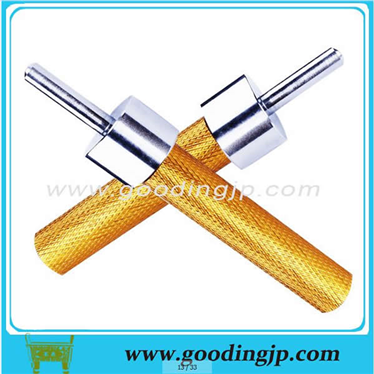
A gauge handle may seem like a simple accessory, but in automotive checking fixtures, it is the primary interface between the inspector and the inspection tool. Its design, ergonomics, and manufacturing precision directly impact inspection speed, operator fatigue, and ultimately, the reliability of quality control decisions.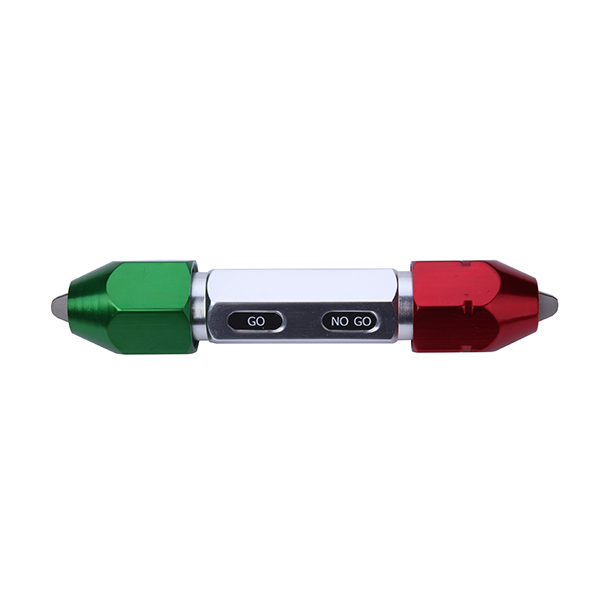
At its core, a gauge handle serves two fundamental functions:
Secure Retention: It must hold the inspection tool—whether a Go/No-Go pin gauge, a thread gauge, or a custom probe—with absolute stability. Any looseness or play will compromise measurement accuracy.
Precise Control: The handle allows the inspector to guide the gauge into position with controlled force, ensuring consistent insertion and withdrawal during high-frequency inspection tasks.
But a well-designed gauge handle goes beyond these basics. It integrates ergonomic principles to reduce hand fatigue, features anti-roll designs to prevent damage when placed on workbenches, and is constructed from materials that withstand the harsh workshop environment—resisting wear, corrosion, and impact.
1. Ergonomic Form Factor
The human hand is not designed for repetitive gripping of cylindrical metal rods. A quality gauge handle features contoured shapes that fit the natural curve of the palm. Common ergonomic forms include:
Tapered or Bullet Shapes: Allow for comfortable thumb placement and reduce grip pressure.
Knurled or Textured Surfaces: Provide secure grip even when hands are oily or gloved, a common condition on automotive production lines.
Flanged or Ring Ends: Prevent the handle from slipping through the hand during pull motions.
2. Material Selection and Durability
Gauge handles endure constant use, often thousands of cycles per day. The choice of material is critical:
Aluminum Alloy (e.g., 6061-T6, 7075): Lightweight, corrosion-resistant, and easily machined to complex ergonomic shapes. Often hard-anodized for wear resistance.
Stainless Steel: Provides maximum durability and a premium feel. Ideal for applications requiring high mass for controlled insertion force.
Engineering Plastics (e.g., Delrin, Nylon): Used for lightweight applications where electrical insulation or non-marring properties are required.
At Gooding, we select materials based on the specific application environment and intended frequency of use, ensuring each handle delivers optimal longevity.
3. Precision Fit with Inspection Tooling
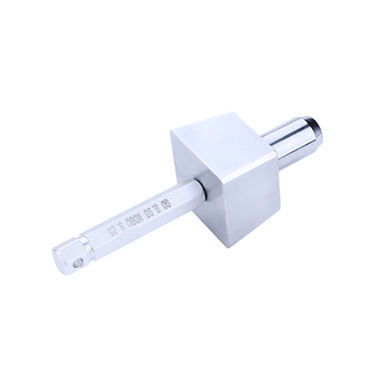
A gauge handle is only as good as its connection to the inspection tool. The interface must be precisely machined to ensure concentricity and zero play. Common mounting methods include:
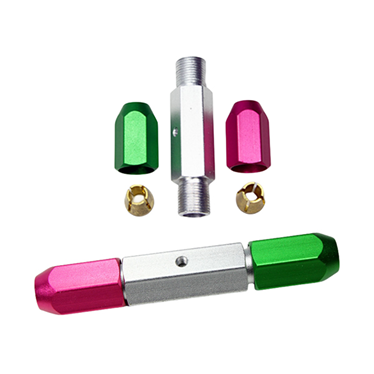
Threaded Connections: Standardized threads (e.g., M6, M8, 10-32 UNF) that accept interchangeable gauge tips.
Press-Fit or Bonded Assemblies: For permanent assemblies requiring maximum rigidity.
Quick-Change Couplings: For applications where different gauge tips need to be swapped rapidly.
Our CNC machining capabilities allow us to achieve tight tolerances on these critical interfaces, guaranteeing that the handle and gauge function as a single, precise instrument.
4. Surface Finish and Corrosion Resistance
Automotive inspection environments can expose tools to coolants, oils, and humidity. Proper surface treatment is essential:
Hard Anodizing (Aluminum): Creates a wear-resistant, non-reflective surface that resists corrosion.
Passivation (Stainless Steel): Removes surface contaminants and enhances corrosion resistance.
Powder Coating: Provides a durable, colored finish that can aid in visual identification (e.g., GO vs. NO-GO color coding).
Consider a typical automotive production line where an operator performs a series of go/no-go checks on 500 parts per shift. With a poorly designed handle:
The operator experiences hand fatigue, leading to slower inspection times.
A slippery or uncomfortable grip increases the risk of dropping the gauge, potentially damaging both the gauge and the part.
Inconsistent grip force leads to variable insertion pressure, compromising the reliability of the go/no-go judgment.
With a precision-engineered handle from Gooding:
Ergonomic contours reduce fatigue, maintaining consistent inspection speed throughout the shift.
Secure texturing ensures reliable grip, even with gloved hands.
The rigid, precise connection between handle and gauge delivers consistent, repeatable results.
In short, investing in high-quality gauge handles is an investment in inspection accuracy, operator well-being, and overall production efficiency.
At Dongguan Yuding Industrial Co., Ltd. (Gooding) , we bring decades of precision machining experience to every gauge handle we produce. Our capabilities include:
Multi-Axis CNC Machining: For complex ergonomic shapes and precise interface features.
In-House Surface Finishing: Ensuring consistent quality and durability.
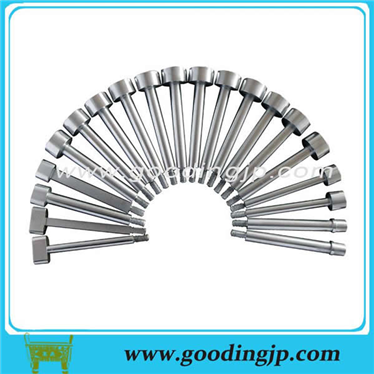
Customization: We can design and manufacture handles to your exact specifications—whether you need a specific length, a unique ergonomic profile, or a custom mounting interface.
We understand that in automotive quality control, every detail matters. That’s why our gauge handles are engineered not just to hold a gauge, but to support the people who use them and the processes they serve.
Contact us today to learn how ourprecision gauge handles can enhance your automotive checking fixture performance.
Dongguan Yuding Industry Limited
Tel:+86-0769-85385589
Phone:+8613480439007
Fax:+86-0769-85385989
E-mail:jenny@goodingjp.com


Phone Number
+8613480439007

Email Address
jenny@goodingjp.com

Address
Room 201, Building 1, No. 6 Chang'an Zhenrong North Road, Chang'an Town, Dongguan City, Guangdong Province