+8613480439007
 jenny@goodingjp.com

Dongguan Gooding Checking Fixture & Equipment Parts Co., Ltd.
Professional checking fixture Manufacturer


In modern manufacturing, especially in automotive, aerospace, and precision engineering, dimensional accuracy is critical. One of the most efficient tools for fast and reliable inspection is the Go / No-Go Gauge.
From a user’s perspective, Go / No-Go gauges are not just measuring tools — they are decision-making tools that determine whether a part is acceptable for production, assembly, or shipment.
This article explains:
Where Go / No-Go Gauges are used
Why they are essential in quality control
Different types of Go / No-Go Gauges
How to choose the right Go / No-Go Gauge for your application
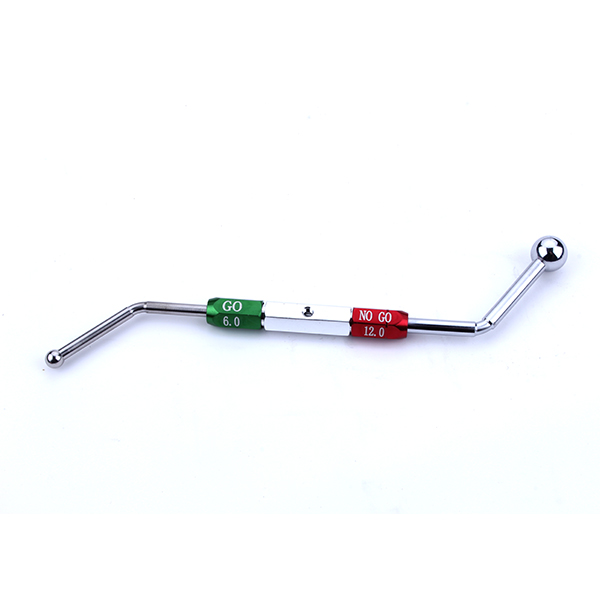
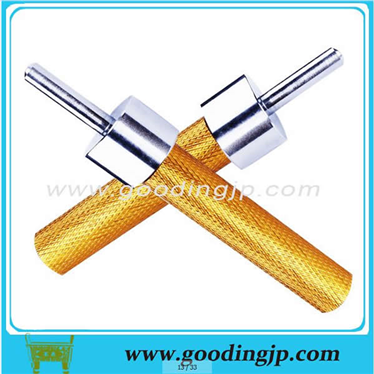
A Go / No-Go Gauge is a precision inspection tool used to check whether a part dimension falls within specified tolerance limits.
GO side → must fit (minimum material condition)
NO-GO side → must NOT fit (maximum material condition)
This simple pass/fail method allows inspectors to perform fast, repeatable, and operator-independent inspections without needing complex measuring instruments.
In automotive production, Go / No-Go gauges are widely used for:
Hole diameter verification
Slot and profile checking
Assembly fit validation
Body-in-white inspection fixtures
They ensure that every component will fit properly during assembly, reducing rework and warranty risks.
In high-precision industries, tolerance requirements are extremely strict. Go / No-Go gauges help verify:
Critical bore sizes
Functional clearances
Mating part compatibility
Because of their simplicity and repeatability, they are ideal for high-reliability inspection processes.
On production lines, speed is as important as accuracy. Go / No-Go gauges allow:
Rapid manual inspection
Reduced reliance on CMM or digital instruments
Consistent results across multiple operators
This makes them a core tool in lean manufacturing environments.
Different applications require different gauge designs:
| Type | Application |
|---|---|
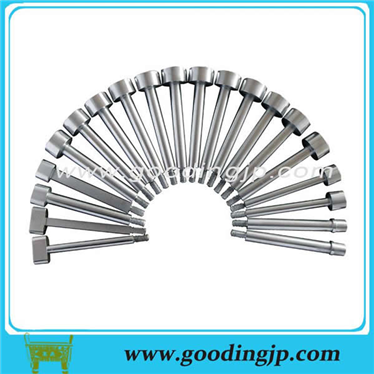
| Pin Go / No-Go Gauge | Hole diameter inspection |
| Ball Go / No-Go Gauge | Angled or hard-to-align holes |
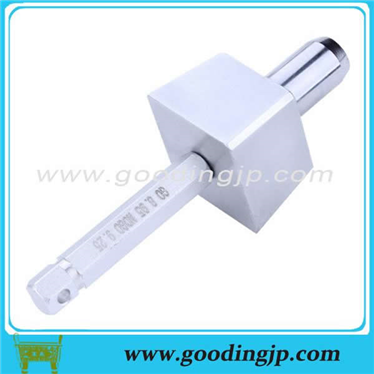
| Shaped Go / No-Go Gauge | Slots, irregular profiles |
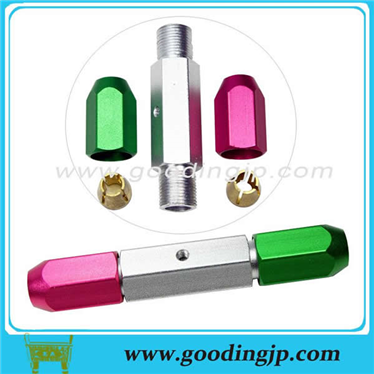
| Thread Go / No-Go Gauge | Internal or external threads |
| Custom Functional Gauge | Special mating condition checks |
Choosing the correct type ensures inspection accuracy and long-term usability.
From an engineering and procurement perspective, selecting the right gauge involves several factors:
Is the gauge checking:
Diameter?
Position?
Profile shape?
Functional clearance?
The function determines gauge type and tolerance class.
High-frequency production?
Manual or automated inspection?
Clean or harsh environment?
This affects material selection and surface treatment.
A professional Go / No-Go gauge manufacturer will help determine:
Correct tolerance limits
Wear allowance
Calibration requirements
Standard gauges work for basic dimensions.
But in checking fixtures and complex parts, custom Go / No-Go gauges provide:
Better fit to the inspection setup
Higher reliability
Reduced long-term maintenance issues
A reliable manufacturer offers more than machining — they provide inspection expertise.
Look for a supplier with:
Experience in automotive or precision industries
Tight tolerance machining and grinding capability
Strong quality control system
Engineering support for design optimization
This ensures your Go / No-Go gauges deliver consistent and repeatable performance in real production environments.
Go / No-Go gauges remain one of the most effective tools in industrial inspection because they combine speed, simplicity, and reliability.
Choosing the right gauge design and working with an experienced manufacturer ensures accurate inspection, reduced production risk, and stable quality control.